Compact Bedside Essentials Without the Clutter
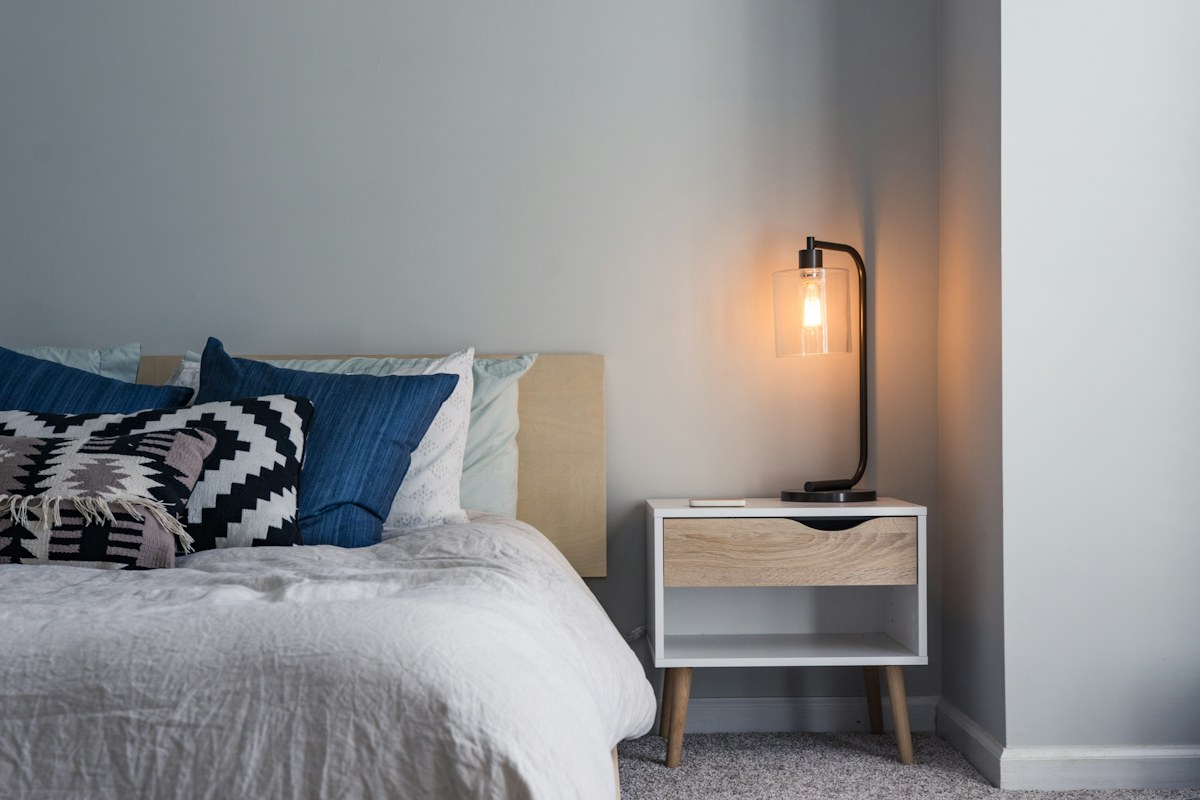
A bedside table can become a display surface for everything associated with winding down: books, hand cream, water, charging cables, receipts and several objects that have no clear purpose. By bedtime, finding glasses means moving a stack. In a small bedroom, the most useful arrangement begins with the things you reach for while lying down.
Picture a narrow table beside a bed positioned close to the wall. A large lamp takes most of its top, while a phone cable slips behind it. Instead of adding a tray on top of another tray, decide which functions genuinely need this location and which belongings can live elsewhere.
List the actions before the objects
Reading, switching off the light, reaching glasses and placing a drink each require a particular kind of space. Write those actions down. A bedside object should help with one of them or have a deliberate decorative role that does not obstruct the others.
If you read several books, keep the current one at the bedside and store the rest nearby. A book awaiting your attention does not need to occupy the same small surface as the one you open nightly. Move paperwork out of the bedroom routine altogether if it has no reason to stay.
Decide how each function fits
| Need | Possible solution | Detail to check |
|---|---|---|
| Reachable light | Compact stable lamp | Switch position and shade clearance |
| Glasses or small essentials | Shallow tray | Enough surface left for other uses |
| Current reading | One book or a small lower shelf | Easy access without bending awkwardly |
| Charging | Suitable accessible socket and cable route | Equipment instructions and trip hazards |
Our guide to bedside lighting for small rooms looks at positioning and glare. Choose the lighting format before filling the remaining space, because its base and shade can determine the whole arrangement.
Measure from the bed
Check the table height from your normal resting position. A surface that looks proportional in a photograph may be difficult to reach beside your mattress. Include the actual mattress and any topper when assessing height, then check the table’s footprint and the walkway around it.
Open drawers fully before deciding a unit fits. A narrow cabinet is not useful if its drawer hits the bed frame. Consider whether a shelf is easier than a drawer for the few things you need, while recognising that open storage makes every object visible.
Keep liquids and electrical equipment apart
Choose a stable place for water where it is less likely to be knocked over, and keep it away from charging equipment and electrical fittings. Follow device and charger instructions, use compatible equipment and avoid routing cables where they can be trapped or create a trip.
Do not cover a charging device with bedding or turn a pile of books into a cable support. If charging makes the surface awkward, reconsider the charging location. Convenience is only useful when the arrangement is appropriate for the equipment and room.
Add decoration after the essentials
A small object, a pleasing lamp finish or a restrained colour choice may provide all the visual character needed. You do not need several decorative accessories just because the table appears in an interior photograph. The room can feel considered while the usable surface remains clear.
For a bedroom that doubles as a guest space, keep the arrangement understandable to someone unfamiliar with it. A guest room in a shared space covers the wider preparation without requiring permanent hotel-style accessories.
A bedside reset checklist
- Keep the current book and relocate the waiting pile.
- Test light controls while sitting and lying down.
- Give small essentials one obvious place.
- Check drawer openings and walking space.
- Arrange charging according to equipment instructions.
- Remove objects that have accumulated without a purpose.
Spend a few evenings with the simplified setup before buying anything. Notice the repeated inconvenience, then choose an item that solves it. That may be a smaller lamp, a more reachable switch or nothing more than a better place for your glasses.
Questions that come up
Is a bedside tray essential?
No. It helps when small items scatter, but it can waste space if its edges occupy most of a narrow table. Measure before choosing one.
Should both sides of the bed match?
They can coordinate without being identical. Different reading habits or space constraints may justify different storage and lighting arrangements.
Can a shelf replace a table?
Sometimes, if it is suitable for the wall, securely installed and positioned for safe access. Check fixing requirements and load limits rather than assuming any shallow shelf will work.