Laundry Baskets for Small Spaces: Buy for the Whole Journey
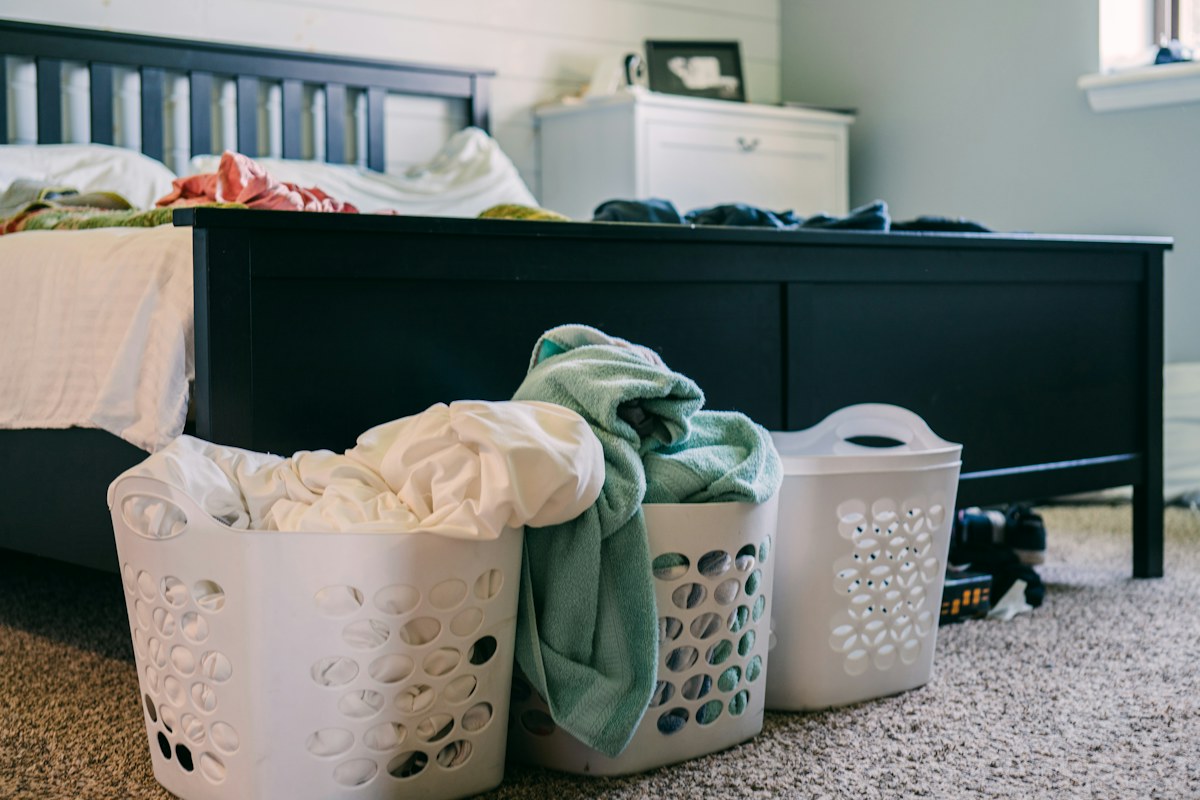
A laundry basket has to do more than hide clothes. It needs to fit where laundry lands, allow sensible storage between washes and make the trip to the machine manageable. In a small home, choosing one oversized hamper can move the problem from the bedroom floor to a cupboard you can barely open.
Begin by following one load from getting changed to putting clean clothes away. Notice how often you carry it, whether stairs are involved and where the basket waits during washing. The right design depends on that whole journey, not just the empty corner where it will stand.
Measure the resting place and the route
Measure the gap where the hamper will live, including skirting boards and door movement. Check the full height with its lid open. A basket can fit beneath a shelf while being impossible to load comfortably.
Then check narrow doors and stairs along the carrying route. Handles that project outward can be inconvenient in tight spaces. If you expect to lift the whole hamper, consider how its shape behaves against your legs when full.
Capacity descriptions are useful only alongside your routine. A large hamper can hold more than you want to carry or more than the washing machine can handle in one load. Follow the appliance’s load guidance rather than emptying a full basket automatically into the drum.
Compare the main designs
| Design | Helpful when | Buying check | Main compromise |
|---|---|---|---|
| Slim rigid hamper | There is a narrow permanent gap | Opening size and ventilation | Awkward for bulky bedding |
| Removable fabric bag | Laundry travels to another room | Handle comfort and bag care | Full bags can sag |
| Folding basket | Storage space is needed between loads | Stability and folded size | Requires regular folding away |
| Divided hamper | Sorting prevents a real bottleneck | Capacity of each section | Dividers consume usable volume |
A divided hamper is useful when several wash categories regularly accumulate. It is less helpful when every section is too small for a usable load or when household members do not follow the labels. Two plain bags may offer more flexibility than one elaborate frame.
Make loading easy
Place the hamper where people naturally remove clothes, provided the location is suitable. A hidden basket at the far side of the flat may stay empty while a chair fills up. Accessibility often matters more than appearance.
Check the opening. A small flap can conceal contents but make it awkward to add towels or retrieve an item. A loose lid needs a place to sit while sorting. Attached lids save that step but require enough clearance.
If children use the basket, choose a design they can reach and operate safely. Consider tipping, folding mechanisms and detachable parts. Follow the product’s intended use rather than letting a hamper become climbing furniture or a play container.
Keep damp items separate
Avoid leaving damp towels or wet sports clothes bundled inside a closed hamper. Let items dry appropriately or deal with them promptly according to their care needs. Breathable construction helps with normal storage but does not make prolonged damp storage a good idea.
Look for a removable, washable liner when that would simplify care. Check whether the liner can actually be detached without tools and how it must dry. A beautiful woven exterior may be harder to clean than a smooth everyday basket.
Keep clean and dirty laundry distinct. If one basket serves both, clean it as appropriate before carrying freshly washed items. A separate lightweight carrying basket may be useful, but test whether you have somewhere to store it first.
Spend on the uncomfortable step
If carrying is the main difficulty, prioritise comfortable handles and manageable size. If the basket sits in a visible bedroom, materials and colour may matter more, provided care and access still work. If sorting is the bottleneck, labels can help without replacing the entire hamper.
Avoid paying for capacity you cannot comfortably move. Several smaller loads of laundry storage may fit daily life better than one huge basket, although they require more individual places.
Once laundry is clean, a linen cupboard reset can make putting it away easier. Storage at the end of the journey matters just as much as storage at the beginning.
Frequently asked questions
Is a lid essential?
No. It can make a visible hamper look tidy, but an open design may be easier to use and inspect. Choose for your location and habits.
Can a folding basket be the only hamper?
Yes, if it is stable, suitable for the intended load and easy to store. Check whether you will actually collapse it between uses.
Should everyone have a separate basket?
Only if that reduces confusion and each basket has a sensible home. More baskets also mean more objects to empty, clean and move.