Choose One Table Accent From the Pieces Already Owned
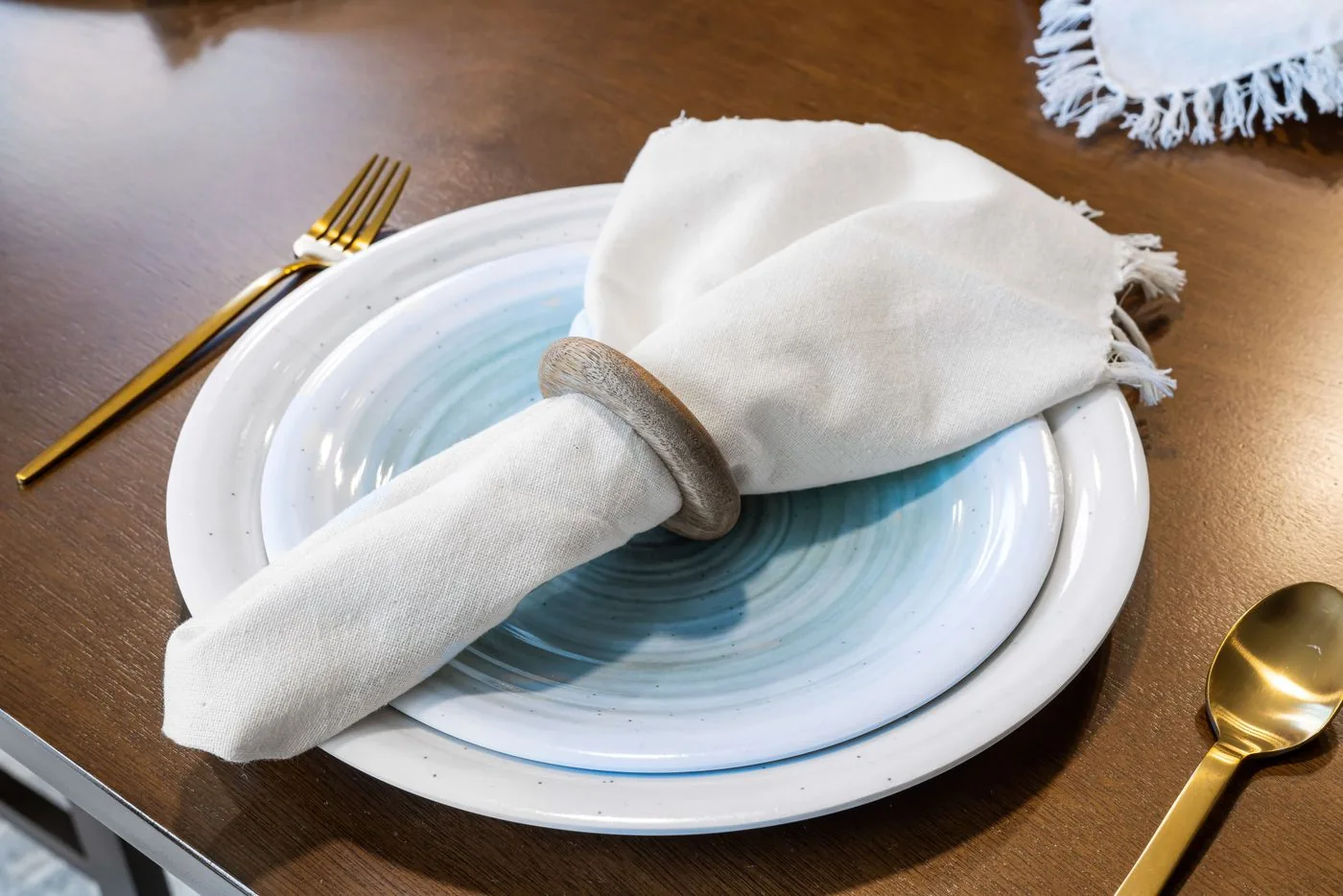
Begin with the working table group
Choose the actual plates, cutlery and other suitable pieces needed for the meal before deciding whether an accent is wanted. A table already contains visible colour and shape through those retained objects. A decorative gap is not automatically a missing product.
The useful question is modest: which optional detail, if any, gives the setting the amount of interest you prefer? Keep the actual gathering and person's preference central rather than treating an inspiration image as a shopping checklist.
Name a colour already present
Look at the real plate border, linen or another retained detail. A small existing tone can provide a reference without requiring an exact match. Write the actual object beside the colour name so a later note does not become an ambiguous instruction to buy something blue or warm.
If the retained group is quiet and that suits the meal, keep it. A colour accent is an option, not a universal requirement that every table needs a stronger contrast to feel finished.
Compare one suitable piece
Try an appropriate retained object with a genuine decorative role and keep the rest of the setting steady. Notice the complete table view rather than deciding from a close crop of the accent alone. The same tone can read differently beside the full group of place settings.
If the relationship feels unresolved, remove the optional piece and compare again. Subtraction may make an existing colour clearer without another purchase. Changing several objects at once can hide which local decision actually helped.
Keep the serving role visible
Include the real serving dishes and relevant guest needs before choosing the final arrangement. An optional object should have a suitable destination if the meal needs its surface. The appearance before arrival is only one stage of the gathering.
Choose materials and products through their intended use. A decorative container should not be assumed suitable for food or another task simply because it sits near the setting. Keep care stages and condition questions distinct from a coordinated appearance.
Preserve one useful combination
If the retained group serves the actual meal and preference, note the specific pieces only where a recurring event makes that useful. A broad colour formula may hide different patterns, dimensions and requirements. Keep the record proportionate rather than creating an inventory of every possible setting.
What if another accessory would repeat the accent more strongly? Ask whether it has a real role before buying. What if the colours differ but the table feels clear? Keep that considered relationship instead of inventing a matching problem. A useful single accent connects retained objects while leaving the actual meal and its ordinary return more important than a decorative theme.
After the gathering, return each piece through its own requirements. A visual group should not become one assumed universal care routine for products that merely share a tone.
Related reading
A Small Dining Table That Works Between Meals, Keep Display Ceramics Distinct From Everyday Tableware.