A Bedroom Laundry Routine Without the Floor Pile
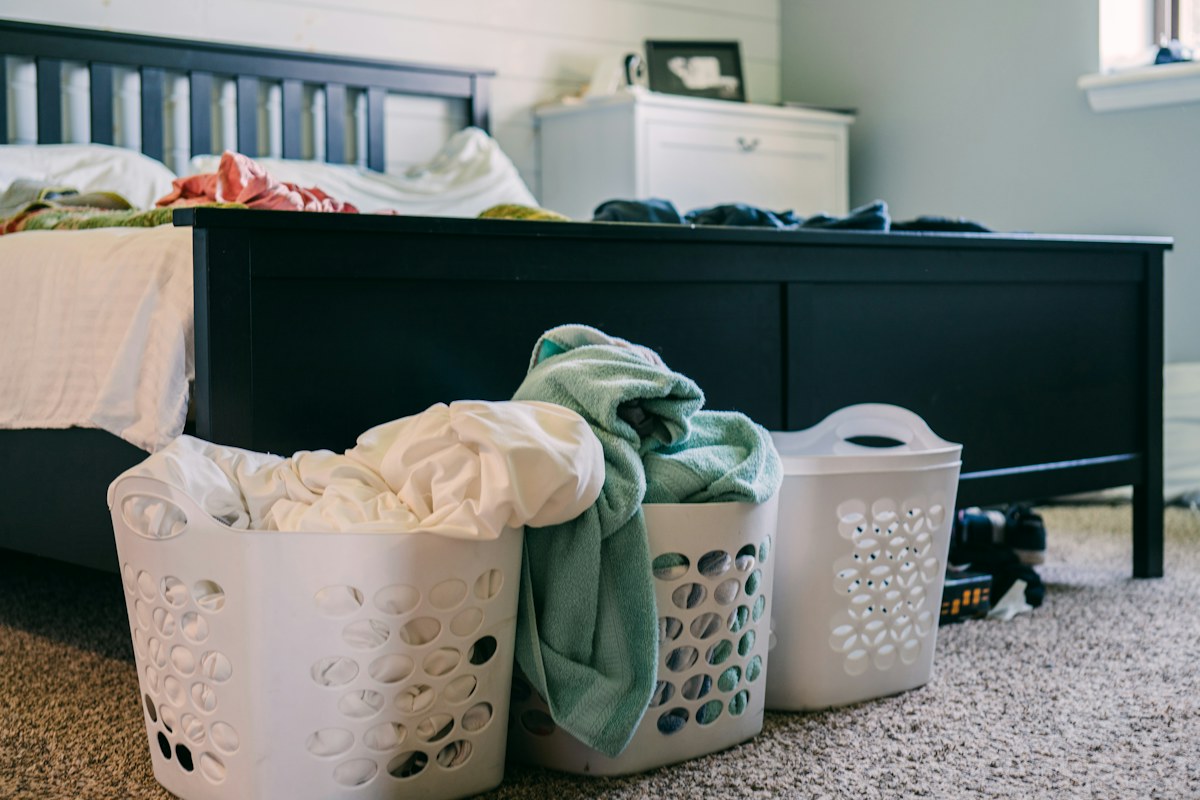
A chair disappears beneath clothes surprisingly quickly. Some pieces need washing, one jumper could be worn again, and the duvet cover waits beside the basket because it will not fit inside. By the weekend, the whole collection feels like one large task. A better bedroom laundry routine gives each category a clear destination before it reaches the floor.
The aim is not to install a miniature laundry room beside the bed. In a compact room, one well-chosen basket and a small place for rewearable clothing may be enough. Start by noticing where clothes naturally land when you get changed, then make the useful destination easier to reach.
Give worn clothes a clear decision
Decide whether an item is ready to wash, suitable to wear again, or needs a particular treatment. Put it in the appropriate place immediately. Returning a worn piece to a clean drawer without checking it simply hides the decision until later.
A small hook or short hanging rail can hold clothing intended for another wear, if the garment and space suit that arrangement. Keep the capacity modest. When this area fills, review the contents rather than adding another chair. Follow textile care instructions and avoid leaving damp clothing in a heap.
Choose the basket around the route
| Bedroom situation | Useful feature | Possible compromise |
|---|---|---|
| Narrow route to the door | Slim footprint | Smaller capacity |
| Washing machine downstairs | Comfortable handles and manageable load | More frequent trips |
| Shared bedroom | Clear agreed sorting system | Extra space if separate baskets are needed |
| Bulky bedding days | Separate temporary carry bag | Needs putting away afterwards |
Measure the floor space and doorway before buying. A tall basket may look compact while its lid hits a shelf or its handles catch on the route out. Our guide to laundry baskets for small spaces explores those everyday handling details.
Keep bedding changes separate from overflow
Plan a bed change for a time when the removed textiles can enter a suitable wash and drying cycle. Stripping every bed at once may create more material than your equipment or drying space can manage. Work within the washing machine’s instructions and each textile’s care label.
If the basket is already full, carry bedding directly to the next practical stage rather than balancing it on top. Never make the lid a permanent storage shelf. Keep clean bedding protected from the used-clothes route so the two do not become mixed during a hurried changeover.
Use a small daily reset
Before settling for the evening, collect stray socks and return rewearable pieces to their agreed spot. This is a brief decision round, not a demand to run a wash every night. If you discover an item needing special treatment, set it aside clearly and consult its instructions before acting.
Link this movement to something you already do, such as closing curtains or preparing clothes for tomorrow. A ten-minute evening reset offers a broader structure if several rooms tend to gather loose belongings.
Keep the routine realistic
A household with limited drying space may prefer smaller, planned loads. Another may have capacity for a larger wash day. Choose the rhythm that prevents damp textiles lingering and leaves time to finish the job, including putting clean items away.
Buy accessories only for a repeated difficulty. A second enormous basket can hide a backlog rather than solve it. A washable liner, suitable carry bag or a few practical hooks may address a more specific problem, provided the dimensions and care requirements work for you.
Bedroom laundry checklist
- Put the main basket where changing actually happens.
- Give rewearable clothing a small, separate destination.
- Keep damp items out of compressed piles.
- Plan bedding changes around drying capacity.
- Check care labels before combining unfamiliar textiles.
- Finish with folded or hung clothing returned to storage.
Questions that come up
Should clothing be sorted in the bedroom?
Only to the extent that it makes the routine easier. If space is tight, one basket and sorting near the machine may work better than several permanent compartments.
Do I need a lidded basket?
A lid can keep the room visually calmer, but it should be easy to use and appropriate for the items stored. It does not make damp textiles suitable to leave inside.
What if the chair keeps filling up?
Check whether the alternative destination is inconvenient or already full. Reduce the number of unresolved pieces and make the next action clear before buying more storage.