Give a Chair Throw a Clear Place When the Seat Is Used
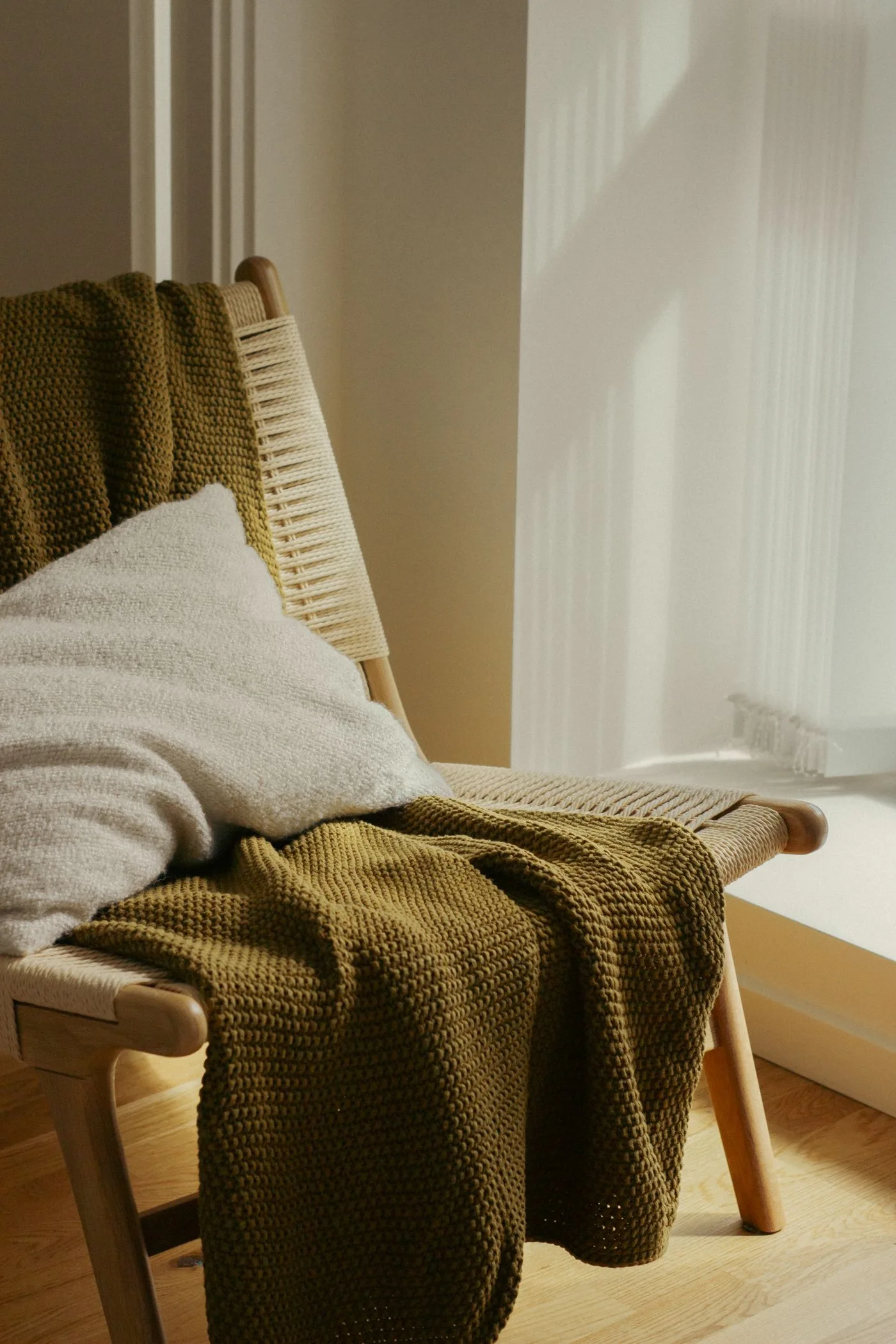
Choose the throw around the actual seat
A throw can make a chair inviting while becoming an obstacle when someone sits down. Begin with the actual person and furniture role. Decide whether the textile is used during sitting, mainly displayed or both, and choose a suitable arrangement that makes that role clear.
Follow the chair and textile requirements for use, compatibility and care. A photograph of a textured throw over a seat illustrates a decorative idea, not evidence that every material can be placed or handled in the same way. The practical handover belongs to the actual products.
Give a removed throw an appropriate destination
If the textile normally comes off before sitting, choose a suitable nearby waiting place. Avoid assuming it can always occupy another necessary chair or the floor. A modest clear destination makes the seat available without creating a new household pile. Include the ordinary nearby book or other appropriate personal item when checking that destination, so the throw does not take the only surface the reader needs.
Our shared-room blanket guide connects textiles with real use. A chair throw can use that same clarity, keeping the displayed and occupied states understandable rather than preserving only the empty-room appearance.
Keep the active textile group small
Choose the suitable piece actually used at the chair and store reserve textiles appropriately elsewhere. Several decorative layers can create more moving and returning than the seat needs. A useful chair does not have to display every coordinated fabric retained for the room.
The throw choice guide starts with a piece that will genuinely be reached for. Keep that real role central instead of adding another layer merely to create a richer photograph.
Include the person sitting down
Use the chair normally and notice where the textile goes through the appropriate movement. Keep personal needs in the decision rather than assuming one fold suits every user. A throw that helps one person settle comfortably may be unnecessary for another.
If the material needs attention under its care requirements, complete that stage before returning it to the ready group. A neat fold should not be the only sign that the item is ready to use. Keep used or unresolved textiles through their actual next destinations.
Make returning the throw a modest ending
After the appropriate stage, return the ready textile to the agreed suitable position. Notice whether that routine is easy enough to happen during ordinary evenings. If it repeatedly fails, the destination or active quantity may need changing rather than a more elaborate decorative fold.
What if the chair works best without a throw? Keep the textile for another suitable role. What if the throw is the part of the seat that is especially enjoyed? Preserve its use rather than treating it as decoration alone. A considered chair arrangement supports both the textile's real purpose and the person who wants to sit down.
Compare current options
Use the measurements and buying checklist above before choosing. These links go to current retailer ranges; prices, stock and delivery terms can change. We do not earn commission from these links.