Leave a Rolling Pin Enough Working Space Beyond the Dough
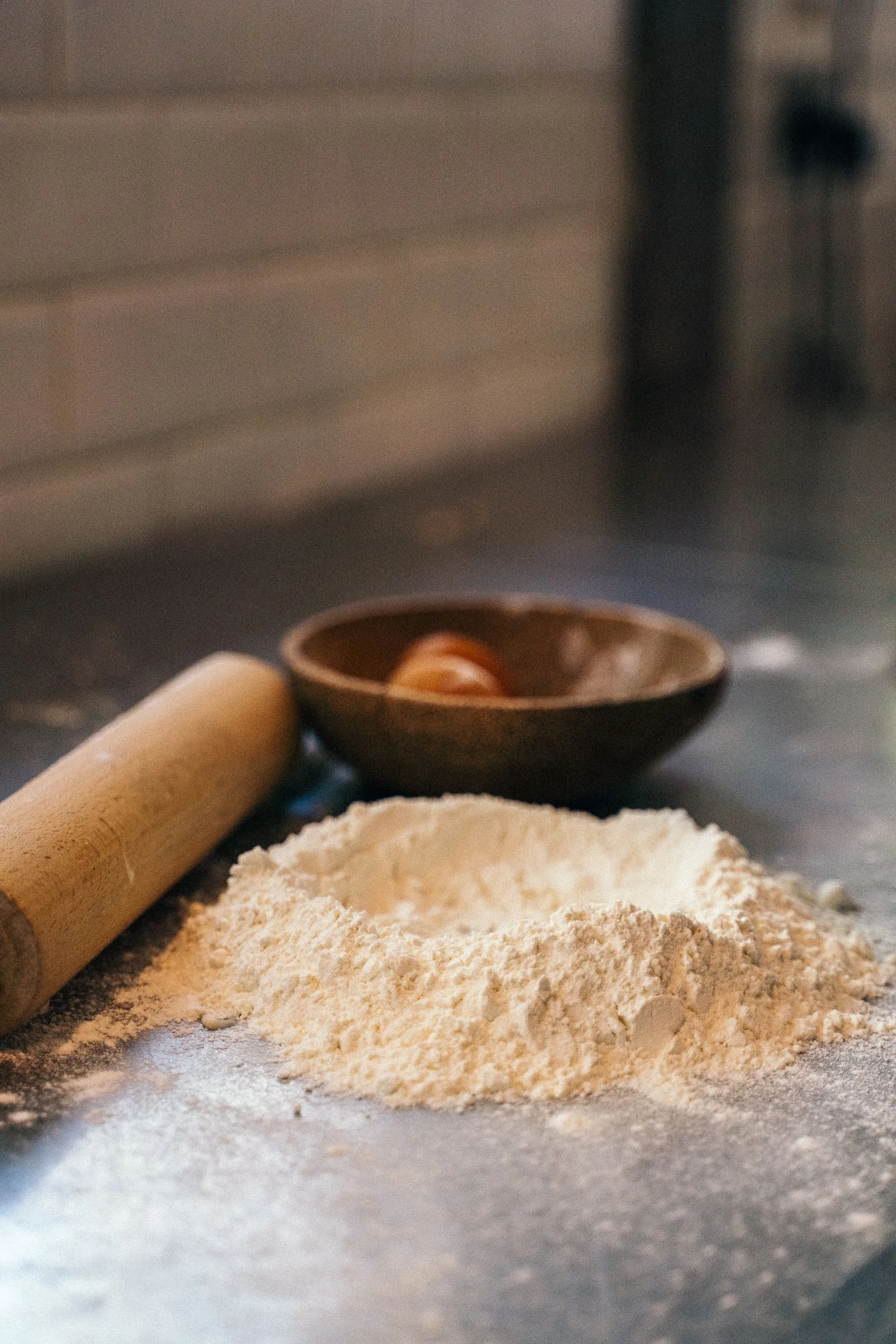
A useful rolling area has an active zone and a parking zone. The first carries the dough and the rolling movement; the second holds the things needed before and after that movement. Separating those roles can make a compact worktop clearer without assuming the whole kitchen must be emptied for one recipe.
Draw the active zone from the method
Read the recipe's intended dough shape, dimensions and handling instructions. Mark the relevant outline with suitable plain paper on a clear surface while no food is being prepared. Include the complete rolling tool and the space needed for the intended grip and movement.
Use the actual product and material guidance to establish an appropriate preparation surface. The paper exercise compares space; it does not make an unsuitable worktop, mat or tool suitable for food use. Keep that practical specification separate from the drawing.
Name the objects that should park
List the items needed at this stage but not under the moving pin: a recipe reference, a suitable receiving pan, a scraper if the method calls for one, or another named tool. Keep later-stage ingredients in their appropriate condition and location rather than displaying everything beside the dough throughout the session.
Give each parked item a proposed position outside the active boundary. Avoid an unlabelled spare corner that gradually fills with unrelated bowls. The parking zone has a job: supporting the current stage without becoming part of the rolling path.
Compare two arrangements before choosing
Try one arrangement with the receiving equipment beside the active patch and another with it in a different suitable position. Use empty cool equipment for the layout comparison. Notice which arrangement requires moving more objects before the recipe's next action can happen.
Do not invent a transfer technique to make an attractive layout work. Follow the actual recipe for moving the dough. If the required movement cannot be carried out suitably within either arrangement, change the setup before beginning rather than relying on an improvised lift at the end.
Preserve the boundary during the session
Keep the current recipe reference visible so the active shape does not grow from an unmeasured impression. If the method asks for a different stage or size, reassess the zone explicitly. Do not let a bowl placed temporarily at the edge quietly become an obstacle everyone works around.
If another person is helping, identify which patch must remain clear and which items can be moved. A short explanation of the two zones is more useful than repeatedly asking them not to put things anywhere on the worktop.
After the stage, return the parked objects through their appropriate next steps and care for the surface and tool as required. Review which object actually crossed the boundary. A practical improvement may be a better parking position rather than a larger pin, a new mat or an expanded kitchen setup.
Related reading
Small Kitchen Worktop Zones That Make Cooking Easier, Kitchen Tools Worth Giving Drawer Space To.