Decide Where an Unused Round-Table Chair Belongs
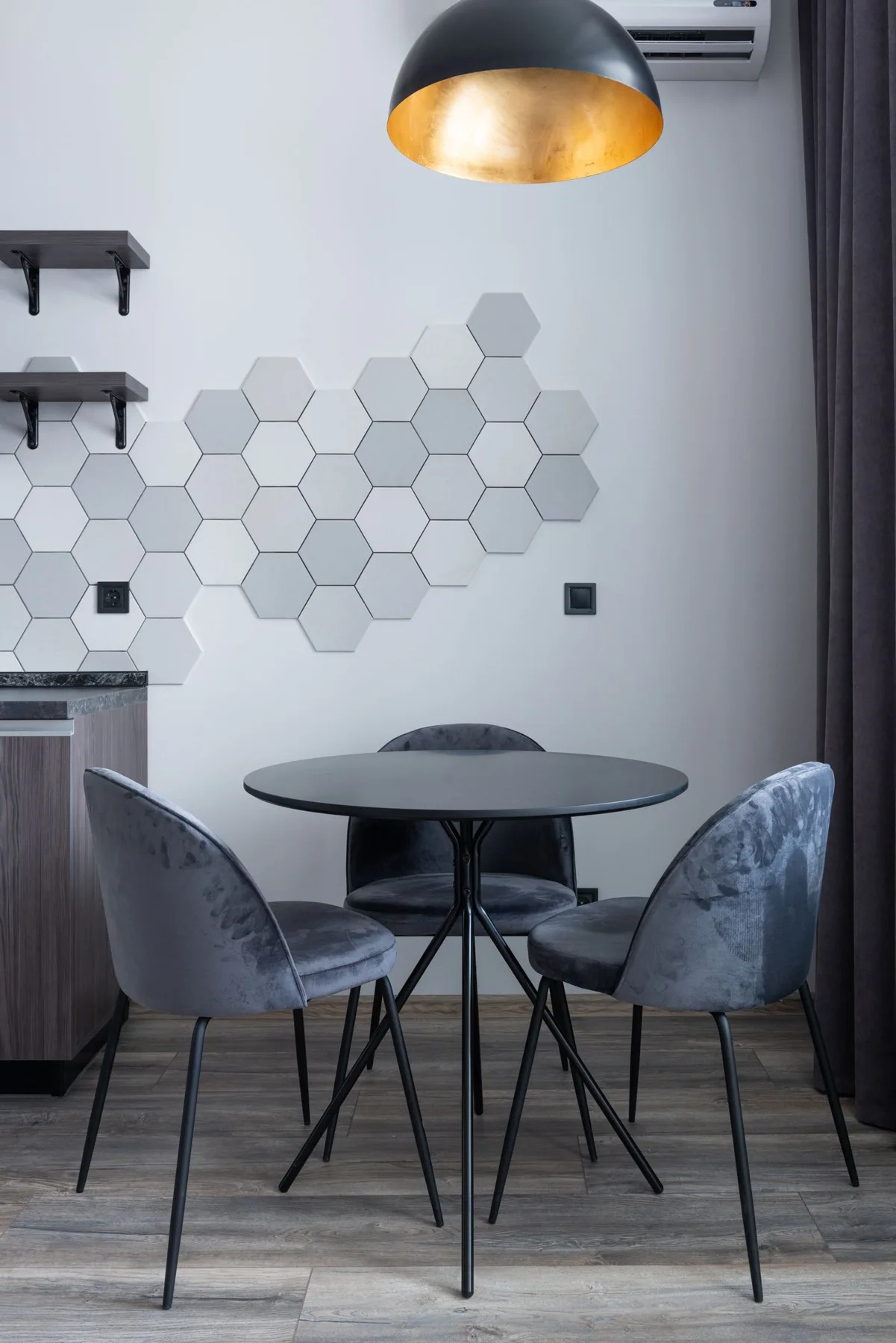
Decide whether the spare place needs to remain
A round dining table can have more chairs around it than the household uses during ordinary meals. Before treating the unused chair as permanent storage or a decorative requirement, decide its actual role. It may be useful for visitors, another room task or an appropriate reserve position.
Follow the furniture's use, handling and storage requirements. This article does not prescribe a universal number of chairs for a table or assess personal seating suitability. The useful arrangement belongs to the actual people, table and room.
Look at the occupied everyday meal
Set out suitable representative tableware and consider the chairs that are actually used. Notice the route around the table and access to nearby cupboards. Include the actual chair pulled back during the meal, rather than judging the spare position only when every seat is neatly tucked beneath the tabletop. An extra chair can be visually balanced while occupying a space the household needs for movement.
Our small-table guide includes the surface's ordinary roles. Keep those uses central rather than retaining every possible seat simply because the product photograph shows a complete set.
Choose an appropriate reserve destination
If the chair is stored elsewhere between visits, select a suitable position that serves the furniture and room. Do not move the access problem to another doorway or necessary household surface. A reserve chair should remain appropriately identifiable and available without becoming another permanent obstacle.
Consider the handling journey through the actual requirements and personal capabilities. A chair that is easy to position once may still be inconvenient to move repeatedly. The frequency of visitors can help decide whether a temporary or more permanent suitable arrangement is realistic.
Keep the seat from becoming anonymous storage
If the chair remains at the table, avoid using its availability as a reason to accumulate unrelated objects there. Give bags, linens and papers their actual destinations. A chair described as ready seating should not require a household sorting session before someone can sit down.
The evening reset guide keeps small tasks proportionate. Returning a few actual objects can support that approach, but an overfilled spare chair may point to unclear storage roles elsewhere in the home.
Review the arrangement when guests come
Before a visit, check the suitable additional seating through the actual attendees' needs and the occupied room. A reserve chair is not automatically the right seat for every person. Keep the conversation and product requirements clear rather than treating matching furniture as the only acceptable outcome.
What if the extra chair is useful every day? Retain its real role and keep it available. What if it is rarely needed? Choose an appropriate reserve arrangement without describing the table as incomplete. A considered round-table setup supports ordinary meals and genuine visits while leaving unused furniture honest about the space and work it requires.