Keep Bedside Lamp Space Separate From Loose Objects
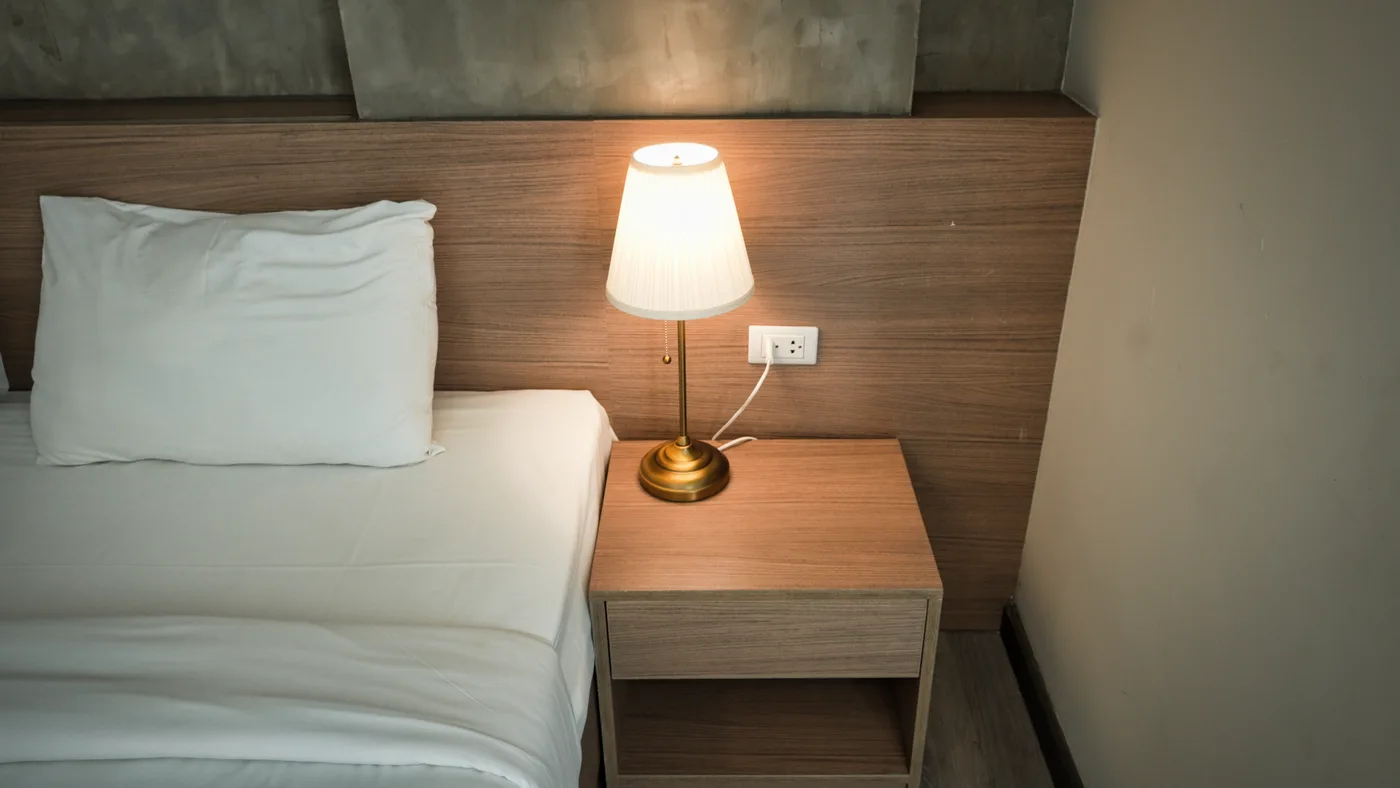
Give the lamp its appropriate space
A bedside table can hold a lamp while gradually gathering enough loose objects to make its ordinary use awkward. Begin with the actual lamp's placement and operating requirements, then identify the other items genuinely needed at night. The surface should support those real roles rather than every object that looks attractive beside the bed.
Follow the lamp, furniture and electrical product instructions. This article does not supply a universal clearance or assess a particular installation. A bedroom photograph can show an uncluttered table without establishing suitable conditions for another product or person.
Choose the current nighttime group
Keep appropriate personal essentials identifiable and move inactive objects to their suitable destinations. A book, an appropriate personal item and the lamp can already occupy much of a small surface. Adding a decorative tray may organize appearances while reducing usable space.
Our bedside essentials guide starts with what is actually reached for. Use that limit before deciding the tabletop needs another accessory or a larger matching piece of furniture.
Look from the ordinary sleeping position
Consider the lamp controls and the other appropriate items from the bed, keeping personal needs central. A surface that looks neatly spaced when standing may be less useful from the actual pillow position. Do not assume one arrangement suits every user of a shared room.
The small-room bedside lighting guide considers the task the lamp should serve. Loose objects should not obscure that operation or encourage moving the lamp into an unsuitable position merely to recover tabletop space.
Keep different stages distinct
A used cup, an active book and an item awaiting care have different next destinations. Avoid letting the table become the indefinite storage position for every unfinished household task. Keep private information appropriately handled rather than displaying papers where a visitor may see them.
If another person clears the room, the appropriate ready group should remain understandable. A simple agreed arrangement can preserve necessary items without requiring a detailed decorative diagram to put the table back together. Keep the current book separate from a finished title too, so a tidy bedside surface does not quietly return the wrong volume to the shelf.
Edit before expanding the surface
Use the table normally and notice which object repeatedly gets moved to reach another. That behavior can identify an unnecessary active item or an unclear final destination. A larger tray will not necessarily address the actual access problem.
What if the table still cannot support the required group? Compare another suitable arrangement through the user's needs and product requirements. What if only the lamp is wanted there? Leave the surface modest rather than filling it by habit. A considered bedside table makes the real nighttime items available while preserving the lamp's appropriate role and the ordinary space around it.