Give a Wardrobe Shelf One Clear Folded Clothing Group
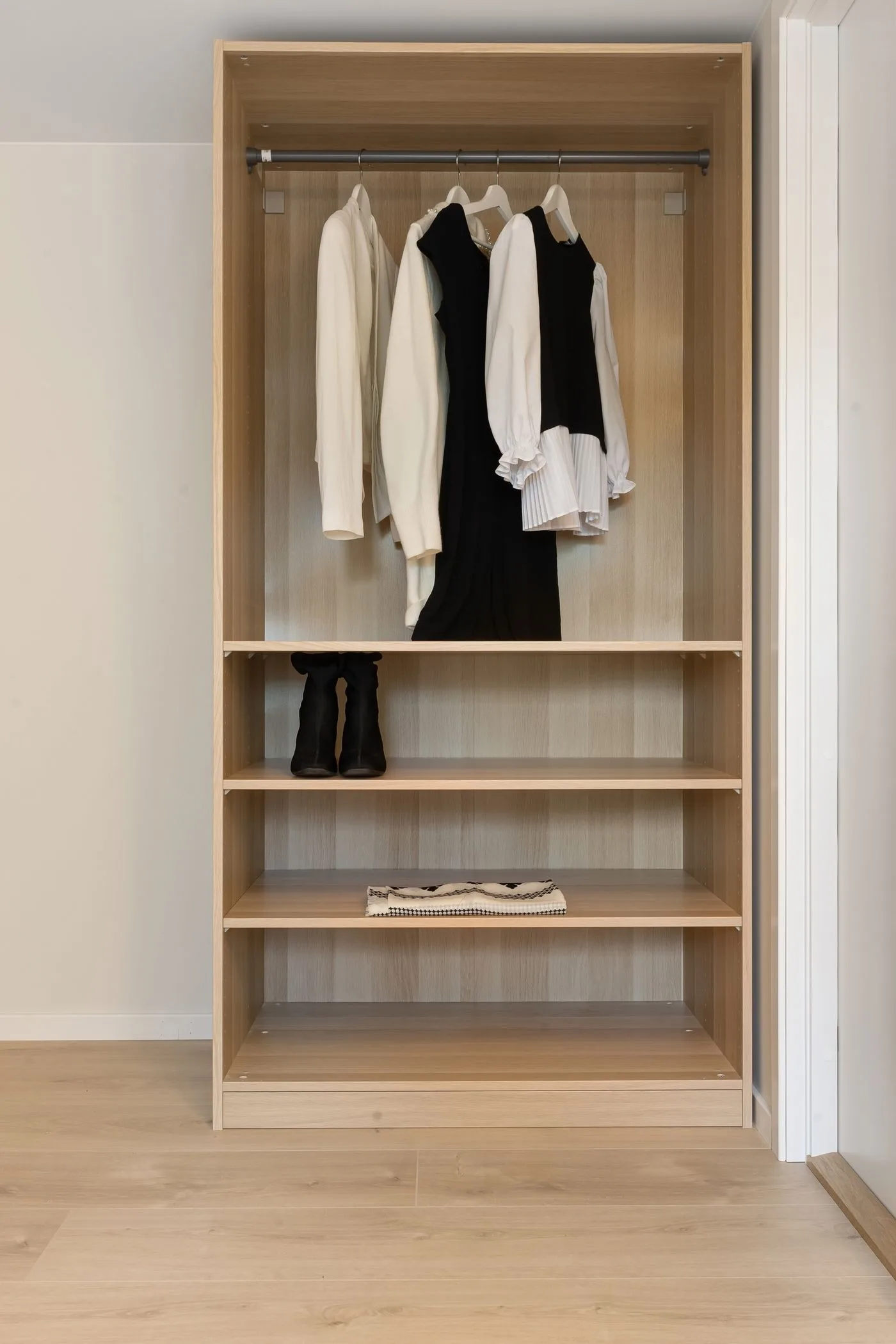
Choose the clothing role the shelf serves
A wardrobe shelf can contain neatly folded clothes from several different stages and still leave the next outfit unclear. Begin with the actual group it should support: current knitwear, an appropriate occasional collection or another defined role. Keep the purpose understandable before deciding how every stack should look. For example, the suitable jumpers worn this week can remain an active group while an occasional textile collection has another appropriate destination, instead of all folded items appearing to serve the same role.
Follow the garments' storage and care requirements and the furniture's loading guidance. A shelf photograph does not establish that every textile is suited to folding or the same storage conditions. The actual product information should guide which pieces belong there.
Keep the active group modest
Choose the appropriate garments genuinely needed for the current role and give reserve pieces suitable destinations elsewhere where available. The shelf does not need to contain every clothing possibility simply because another item can be pressed into the gap.
Our seasonal wardrobe guide makes the transition clear. A defined shelf group can support that handover without turning every season into a complete weekend reorganization or an excuse to buy another storage collection.
Make retrieval part of the arrangement
Notice the actual garment wanted most often and the movement needed to remove it. A stack that looks compact can still be awkward if several pieces must be lifted for every ordinary choice. Keep the furniture's opening and neighboring hanging garments in the comparison.
The bedroom laundry guide completes the return route. A useful shelf needs both directions: appropriately ready clothing should be easy to retrieve and return without rebuilding the whole group.
Distinguish clothing that still needs attention
Keep unresolved care, repair or ownership questions through their appropriate next stages rather than mixing them into the ready folded collection. A neat shape should not imply that a garment is available when its actual requirements have not been met.
If several people use the wardrobe area, agree the relevant boundary. A private folding style or subtle color sequence may not communicate ownership. A plain suitable label or clear position can help where wanted, without turning the shelf into an elaborate instruction board.
Review the group through ordinary dressing
Use the arrangement and notice what repeatedly ends up elsewhere. That behavior may reveal a quantity, access or role problem. Address the specific issue before choosing a larger box that hides the same unresolved collection.
What if the shelf is the only suitable storage available? Keep the active group realistic within its requirements and consider appropriate alternatives for reserve pieces. What if the current arrangement already works? Leave it simple instead of adding another accessory by habit. A considered folded shelf group supports the actual clothing role and household return, rather than proving its order through a photograph of identical stacks.